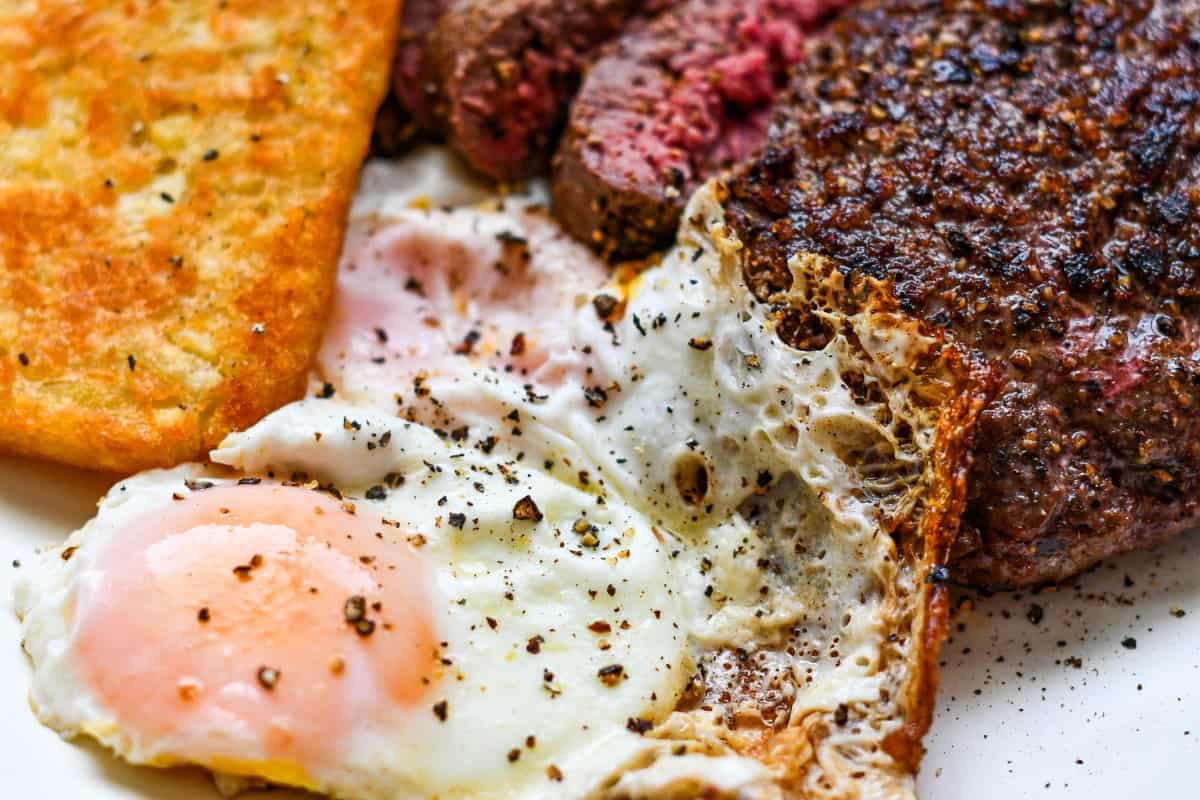
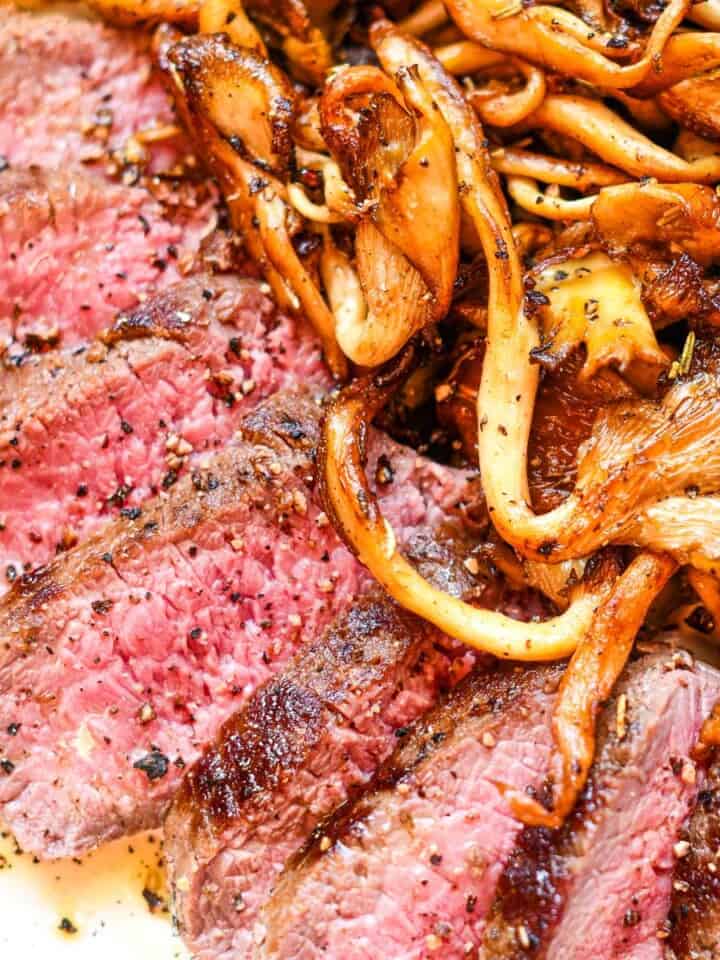
This Easy Venison Steak and Eggs Recipe combines perfectly seasoned steak cooked to medium-rare in a cast iron pan & served with sunny-side up eggs.
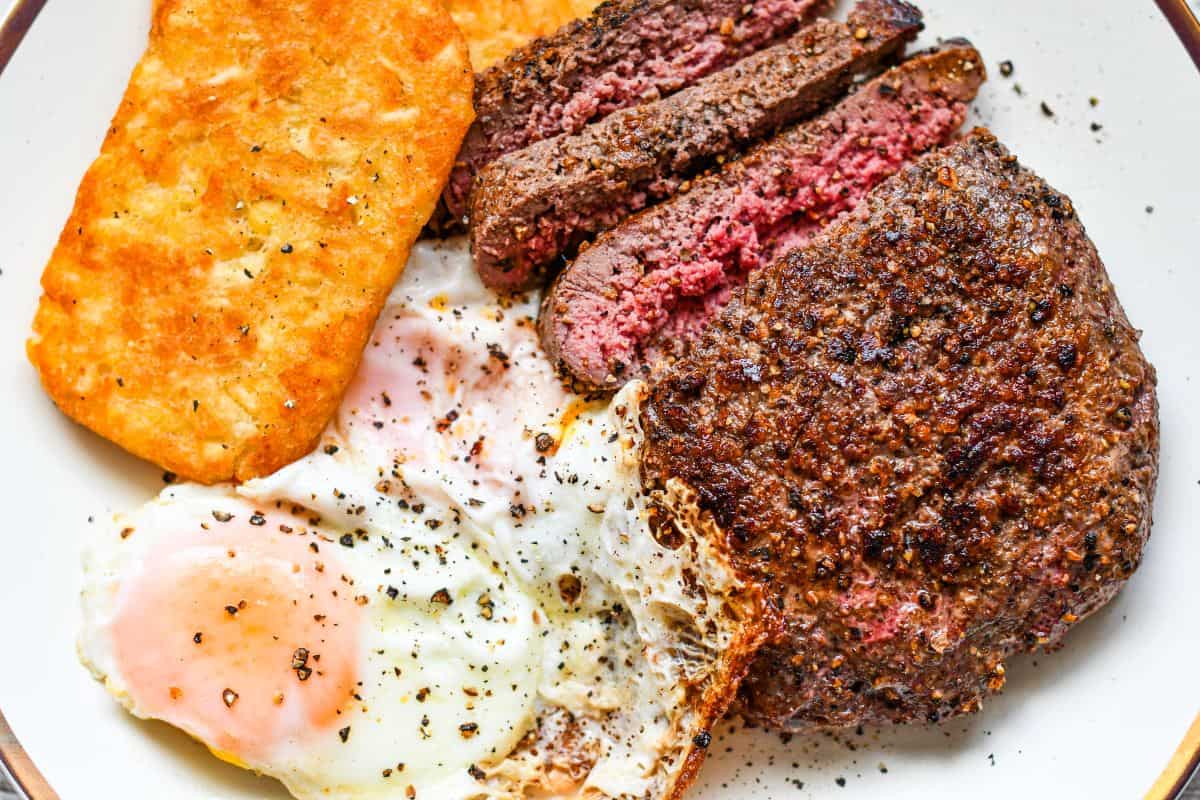
As a wild game chef and full-time recipe developer, I’ve cooked venison just about every way you can imagine. Still, there are moments when the simplest approach feels not only right, but necessary. This venison steak and eggs recipe is one of those moments.
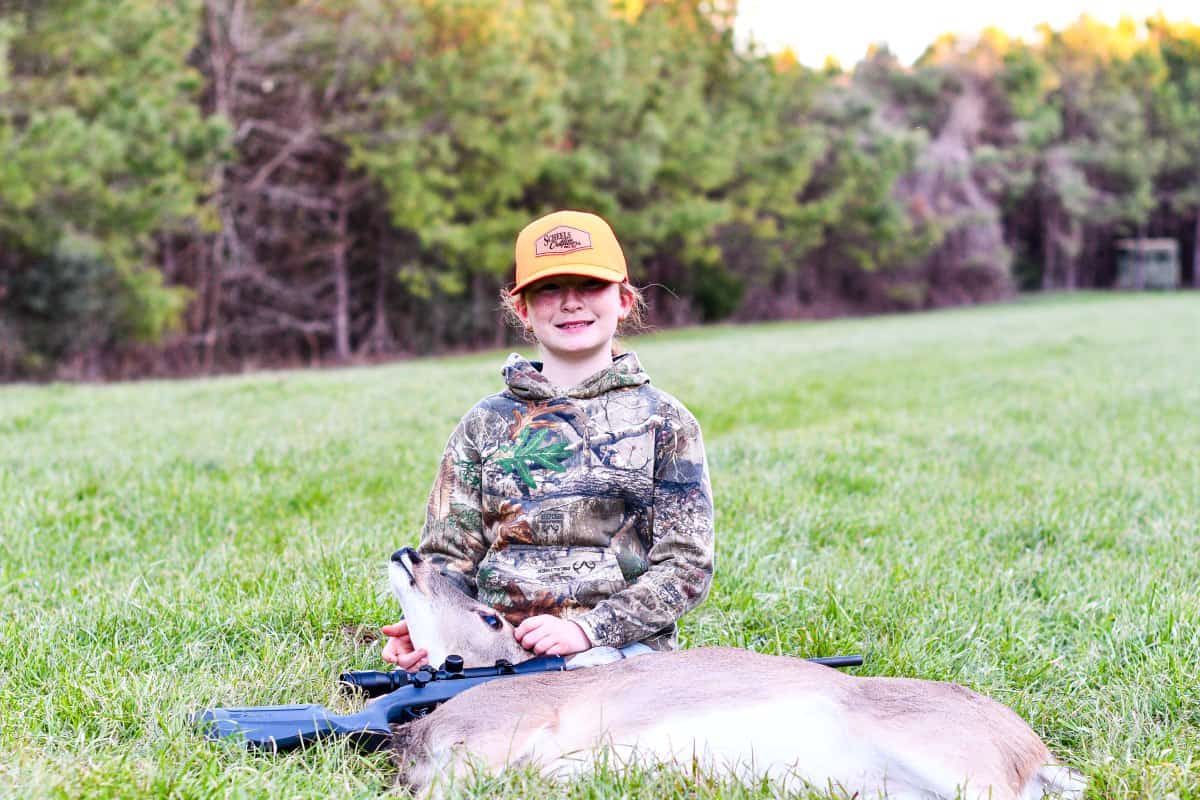
This wasn’t just breakfast. This was a quiet celebration at the stove, a cast-iron skillet warming up while the morning light spilled across the kitchen counter. The venison steak came from my 10-year-old daughter’s very first whitetail deer, harvested in Alabama. Because of that, I wanted restraint with the seasoning - salt, pepper, heat, and nothing more.
That’s what makes this easy venison steak and eggs recipe special. It isn’t complicated, and it doesn’t try to be clever. Instead, it teaches you how to cook venison steak well, respect the animal, and turn a humble breakfast into something meaningful.
The Story of My Daughter's First Deer Hunt
The woods in Alabama felt alive that morning, even under an unseasonable cold that didn’t seem to belong there. Thanks to my cousin Bob’s generous invitation to hunt his land, my 10-year-old daughter, Lucia, was on her first deer hunt in February.
The green grass was completely erased beneath a pale, silver coating of frost, each blade outlined sharply as if sketched by hand. The clearing in front of us looked fragile and still, frozen in place, the world holding steady between night and morning. Lucia and I sat shoulder to shoulder inside a cramped box blind, our knees nearly touching, our winter layers making the space feel even smaller. Every slight shift, whether an elbow brushing the plywood or a careful adjustment of our feet, felt impossibly loud, as if the sound echoed off the blind walls and carried straight out into the open woods before us.
I’d be lying if I said I wasn’t scared, not of whether we’d see a deer or whether Lucia would make a good shot, but of what might happen afterward. Would taking an animal’s life be too much for her? Would this be the moment that closed a door instead of opening one? As parents, we carry quiet fears like that, wondering when a lesson will be too heavy for young shoulders.
Then movement appeared at the far edge of the clearing. Three whitetail does stepped out cautiously, heads up and bodies tense, never quite committing to stillness. They fed for a moment, took a few steps, then stopped again, their nerves written into every twitch of an ear. Lucia tracked them patiently, waiting for the clear, settled shot we had talked about so many times. It never came. After a few long minutes, the deer slipped back into the timber as quietly as they had arrived.
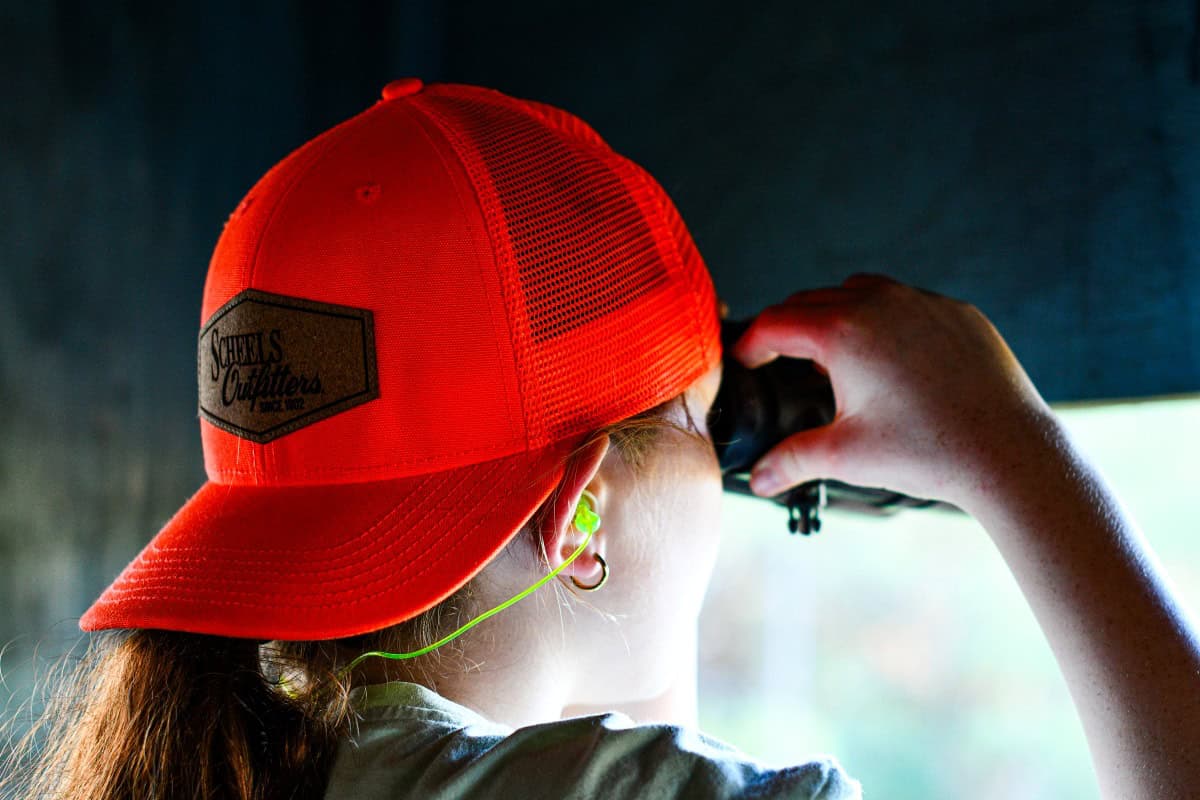
Lucia lowered the rifle and whispered, “I’m sorry.” In that cramped blind, I could feel the weight of that apology land hard. She worried she had failed, that she had let me down. I leaned close and reminded her that you only take a shot when you are absolutely sure, and that choosing not to shoot was exactly the right decision. I told her I was proud of her for waiting and for listening to that inner voice. And I meant it.
Just then, as if the woods had been listening, another doe appeared. She stepped into the clearing alone, calm and unhurried, standing in a way that left no doubt. Lucia didn’t rush. She did exactly what we had practiced, steady and focused, with the weight of the moment settling onto her shoulders in the best possible way. When she took the shot, it was clean and decisive. No drama. No panic. Just intention followed by action.
The woods went still again, and then everything rushed back at once: the pounding heart, the shaky breath, the awareness that something important had just happened. Walking up to her first deer, Lucia didn’t celebrate. She stood quietly and listened, then asked questions about her shot placement. She placed her hand on the animal and said thank you. In that moment, I felt something inside me ease.
Meat Doesn't Magically Appear in Plastic Wrap
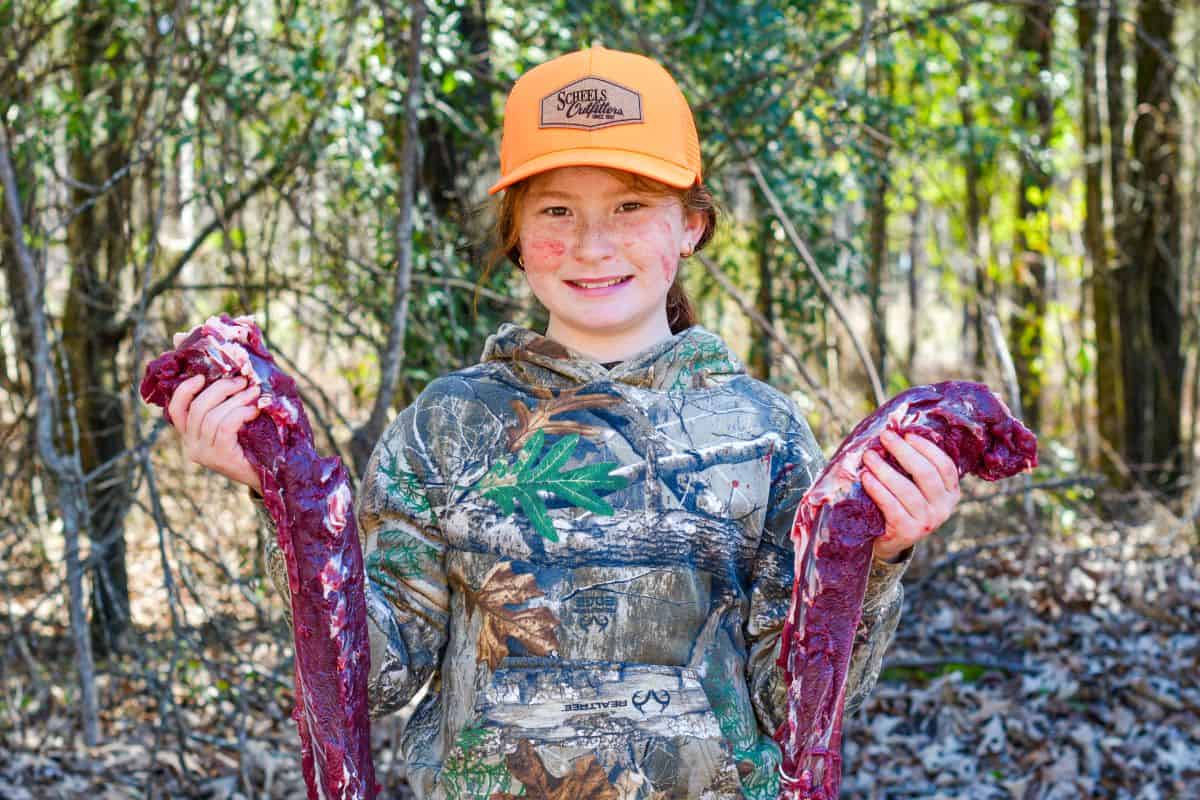
Lucia has grown up knowing that meat doesn’t magically appear wrapped in plastic. She has seen deer carcasses hanging in our garage, helped grind meat into burger, and labeled freezer packages with cute drawings of the animals you’ll find inside. Hunting has always been connected to meals. Because of that, her first deer wasn’t a trophy; it was the last piece we needed to finish filling our freezer and the final contribution to feeding our family through the year ahead. That context mattered and gave weight to the moment without making it overwhelming.
I am incredibly proud of my daughter. Not just for taking a deer, but for how she carried herself through the entire experience - with patience, restraint, respect, and an understanding far beyond her years.
Lucia will be entering middle school next year, and I know our relationship will change in ways I can’t fully predict. Childhood has a way of slipping forward whether we’re ready or not. But this first hunt gives me real hope, hope that even as she grows older and more independent, we’ll still find our way back to mornings like that one in Alabama, sharing quiet spaces and outdoor adventures together for years to come.
Cast Iron Steak and Eggs
Cast Iron Steak and Eggs has always been a working-person’s meal. It’s filling, direct, and comforting. When you swap beef for venison, it becomes even more intentional. A lean cut of venison steak cooks quickly and asks you to stay present at the stove.
Because venison is lean, this recipe focuses on technique rather than tricks. Cast iron delivers even heat. Butter adds richness at exactly the right moment. Most importantly, an instant-read thermometer removes the guesswork so you don’t overcook a beautiful piece of meat.
Meanwhile, eggs cooked in the same skillet pick up all those browned bits, turning breakfast into a complete story told in one pan.
Choosing the Right Steak for Deer Steak and Eggs
For this deer steak and eggs recipe, thickness matters more than the cut. You want a steak about 1½ inches thick so you can build a dark crust on the exterior of the meat without pushing past medium-rare in the center. Backstrap deer loin, top round deer steaks, or even a bottom round all work beautifully.
Before cooking deer steak and eggs, I always reach for a Jaccard meat tenderizer. This step matters, especially for a quick recipe like this one. Because we aren’t simmering or braising, the tenderizer ensures the deer steak is tender without sacrificing the true flavor of venison. It’s a small step that pays off in every bite.

Season Simply So You Can Taste the Meat
That morning with Lucia, I seasoned her deer steak with nothing more than good kosher salt and black pepper. That decision was intentional. We wanted to taste what an Alabama whitetail deer actually tastes like.
Good kosher salt does more than season; it helps form a crust and brings flavor to the surface. Black pepper adds a hint of spice without distraction. When you cook venison you harvested yourself, simplicity often honors the moment better than anything else.
Cast Iron Is Non-Negotiable
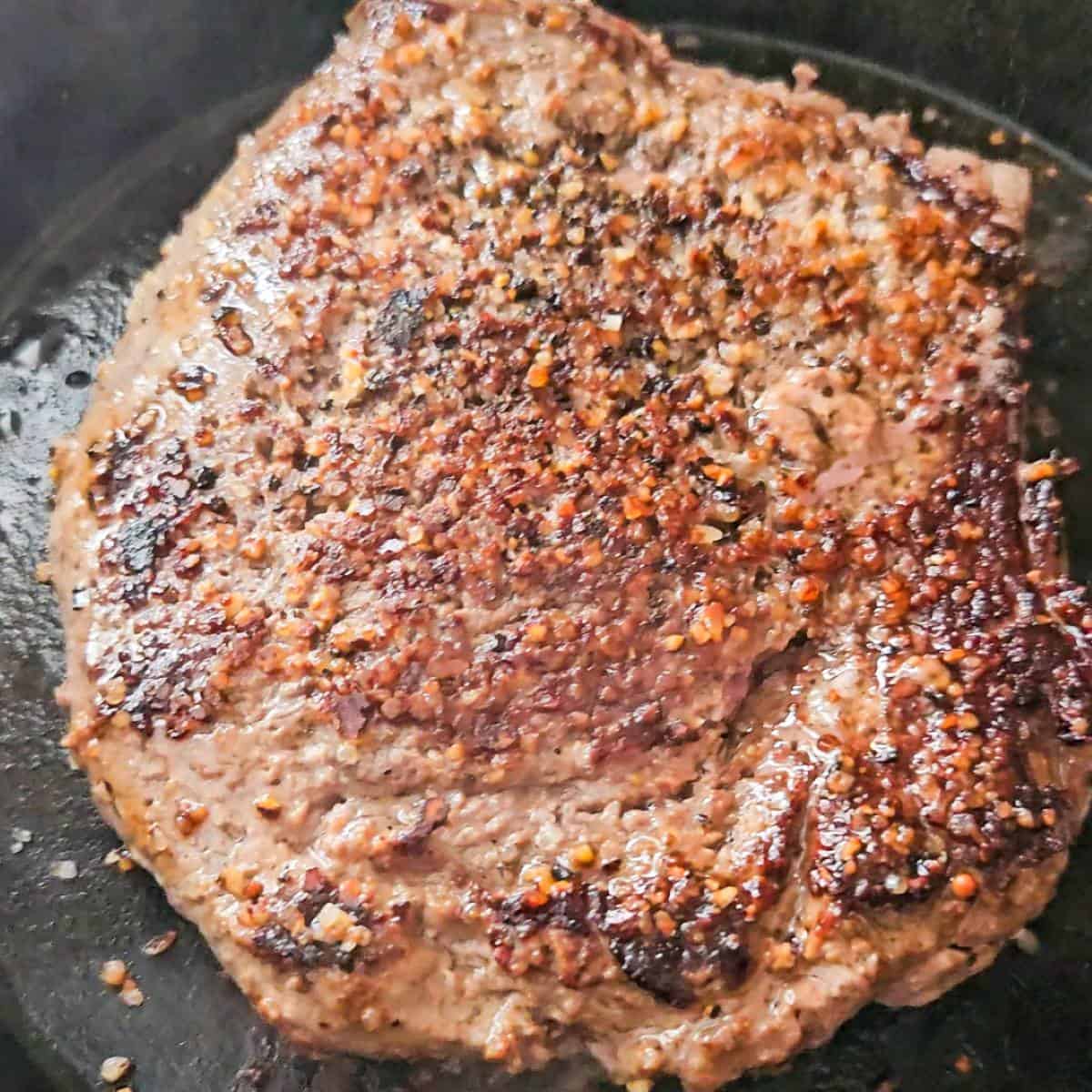
A hot cast-iron skillet is the backbone of cast iron steak and eggs. It holds heat and promotes even cooking without missing a beat.
Before adding the steak, let the skillet heat thoroughly. When the oil goes in, it should shimmer immediately. That first sizzle when the venison hits the pan tells you everything you need to know - you’re ready.
As the steak cooks, press gently with tongs to ensure full contact with the pan. This small habit builds a better crust and keeps cooking even from edge to edge.
Butter, Timing, and Temperature
Once both sides of the steak have developed a deep brown crust, butter goes into the pan. It foams, browns slightly, and coats the steak, adding richness while staying firmly in the background.
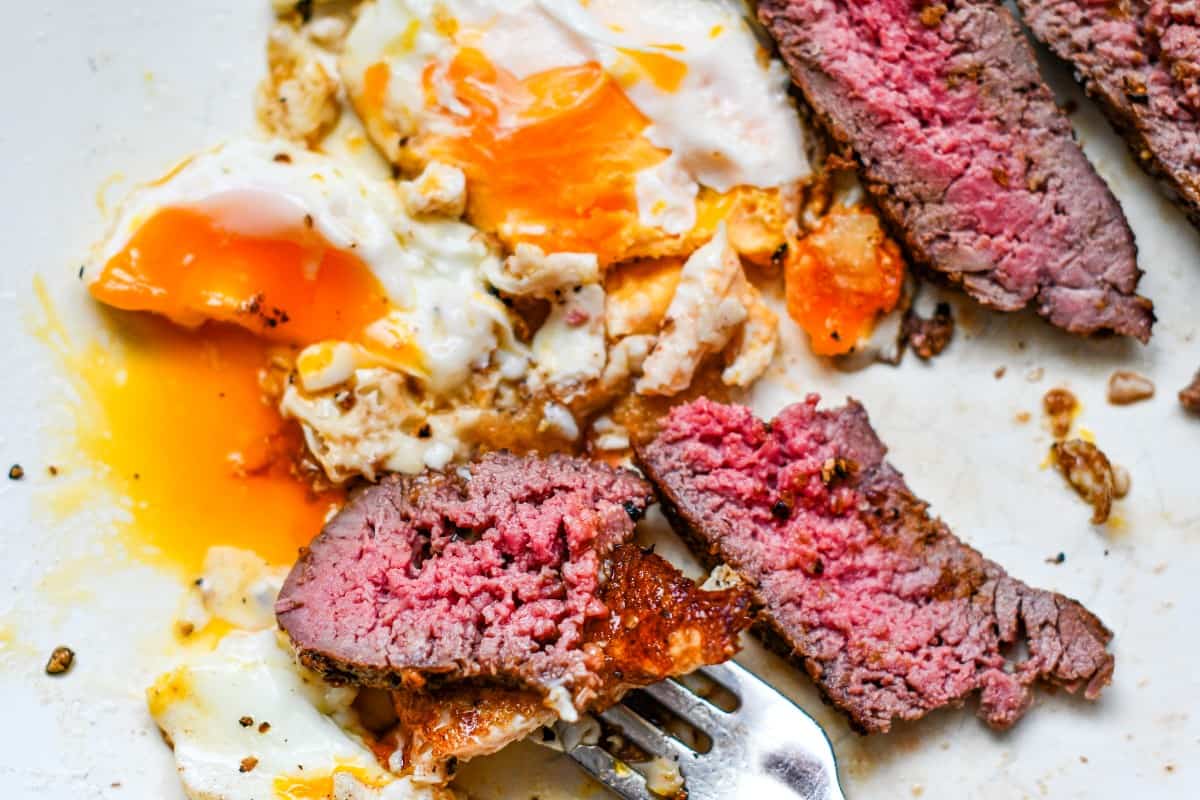
At this stage, the thermometer becomes your guide. For medium-rare venison, 125 to 130 degrees F is the sweet spot. Check often. Venison doesn’t give much warning before it overcooks, and staying engaged is part of cooking it well.
After the steak reaches medium-rare, let it rest. That pause matters. Resting allows the juices to redistribute so the meat stays juicy when sliced.
Eggs That Finish the Story
While the venison steak rests, the eggs go into the same skillet. The remaining butter melts into the pan, picking up all the browned bits left behind by the steak. Crack the eggs gently, keep them separate, and let them cook to your preference.
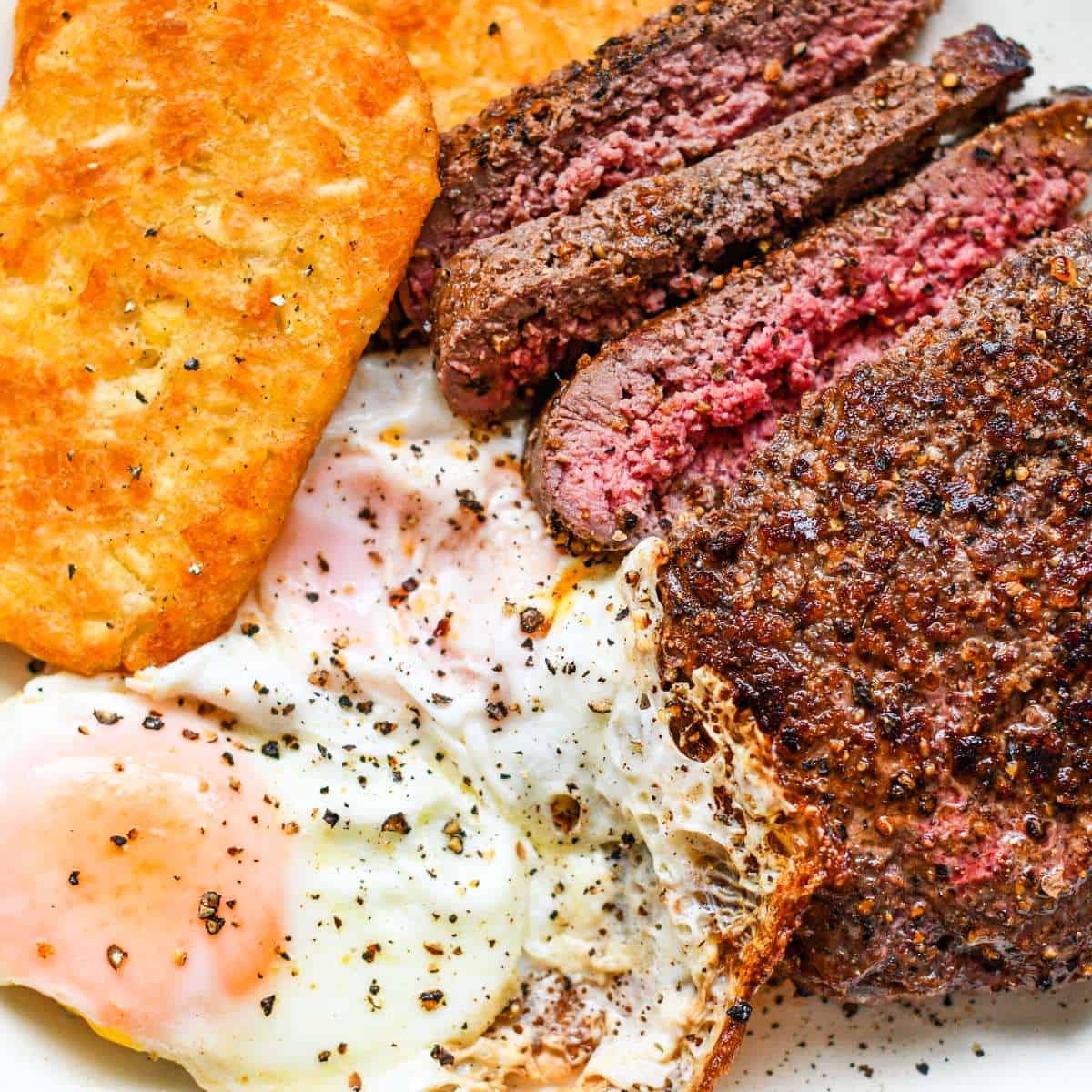
Soft sunny–side up feels right here. The yolk becomes a sauce, mingling with butter and venison juices on the plate. Season lightly at the end with salt and pepper, because the skillet has already done most of the work for you.
More Venison Steak Recipes
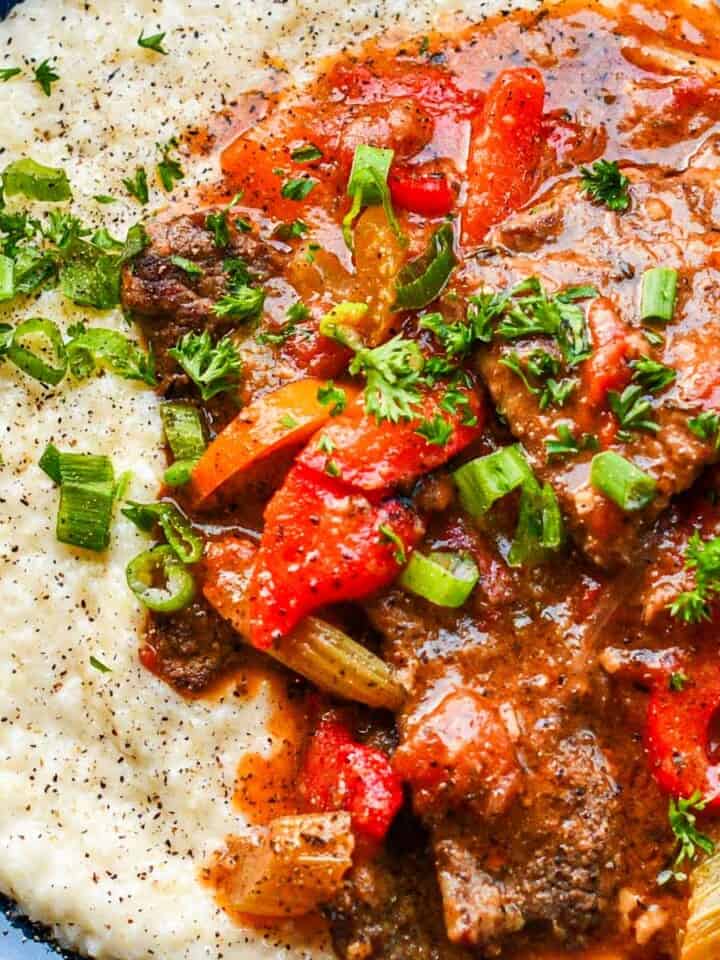
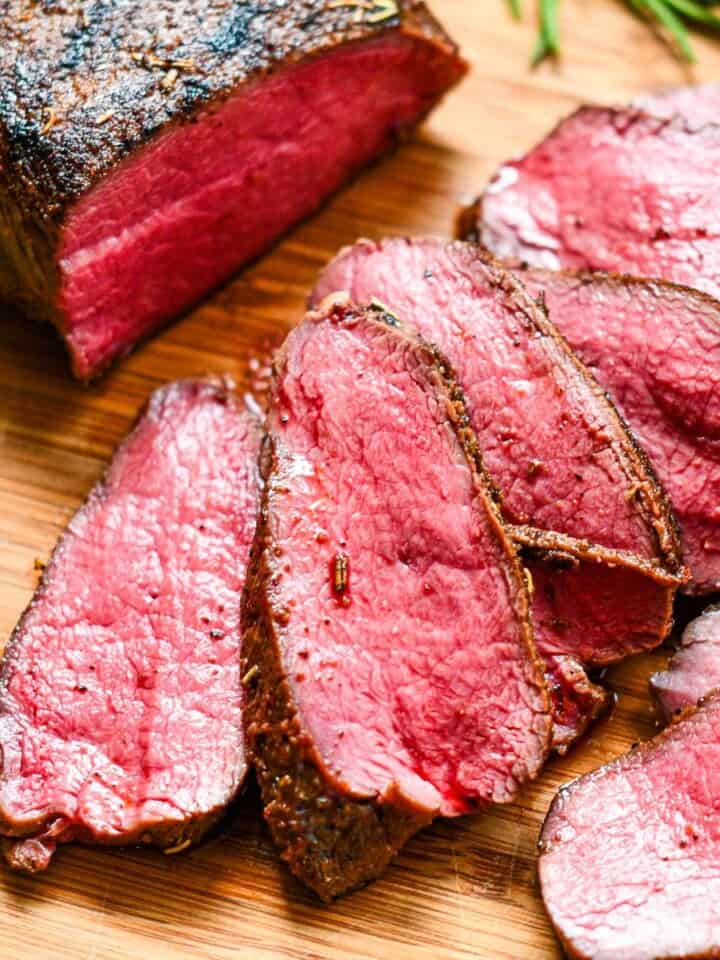
If you like deer steak and eggs and are looking for another great way to use venison steak cooked in cast iron, check out all of our venison steak recipes here.
Join Our Wild Game Cooking Community
Sign up here to receive a new recipe in your email inbox every Tuesday morning!
DID YOU MAKE THIS RECIPE?
If you make this Easy Venison Steak and Eggs Recipe, tag @wildgameandfish so I can share it on my Instagram stories.
Did you enjoy this Venison Steak and Eggs Recipe? Be sure to leave a 5-star rating RIGHT HERE!
Venison Steak and Eggs
Ingredients
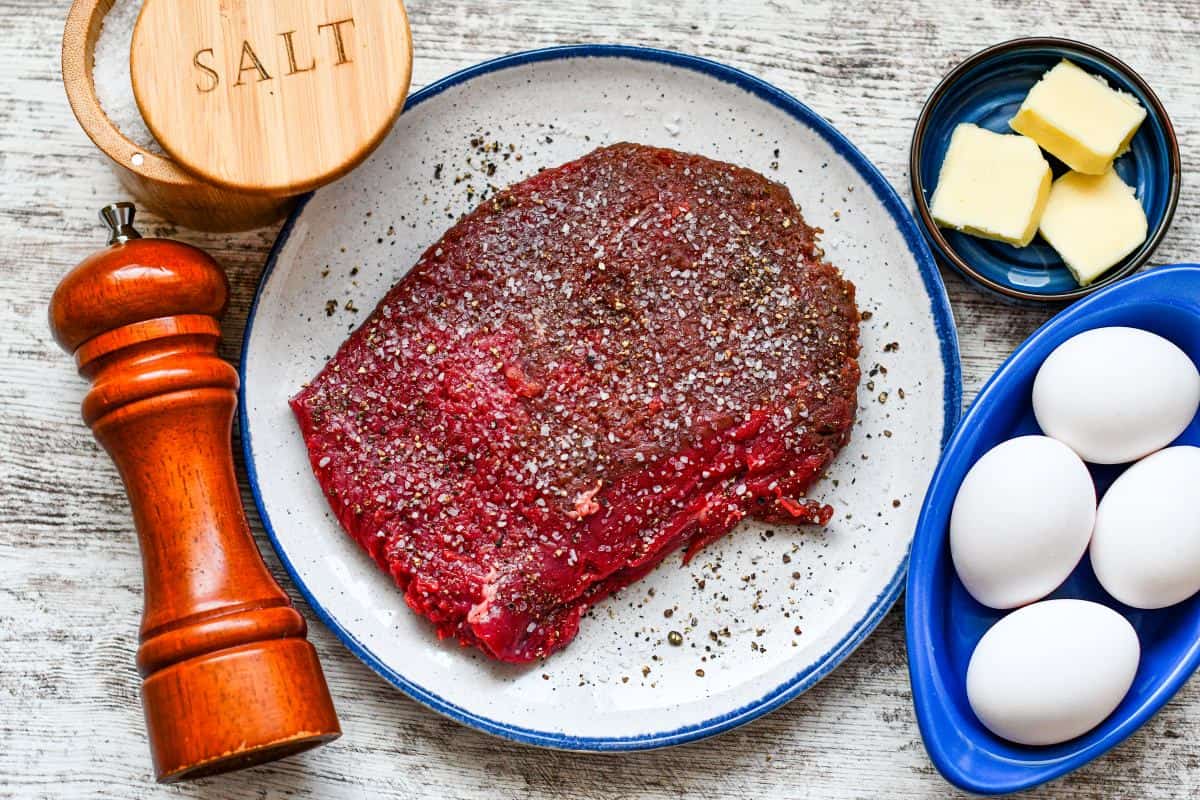
- 1 8 to 12-ounce venison steak (1 ½-inches thick)
- kosher salt
- black pepper
- 2 Tablespoons avocado oil or canola oil
- 3 Tablespoons butter, divided
- 4 large eggs
Instructions
- Place the steak on a cutting board and tenderize using a Jaccard meat tenderizer.
- Pat the venison steak dry with a paper towel and season both sides generously with salt and pepper.
- Heat a large cast-iron skillet over medium-high heat. Add the oil to the skillet, carefully swirl it around to coat the pan, and then add the venison steak.
- Let steak sizzle for about 2 minutes, then use tongs to flip it over and cook about 2 more minutes over medium heat. Press down gently to ensure even contact between steak and pan. When the steak has developed a dark brown crust on both sides, add 2 tablespoons of the butter.
- After another one minute, use an instant-read thermometer to insert into side of steak to check the internal temperature. For medium-rare meat, 125 to 130 degrees is ideal. Keep checking the steak with the thermometer every 90 seconds until you reach the proper temperature.
- Once you've reached a perfect medium-rare temperature, remove the steak and transfer it to a cutting board and let it rest for 5 to 10 minutes while you fry the eggs.
- Keep the heat at medium and add the remaining 1 tablespoon butter to the cast iron skillet. Crack the eggs into the skillet, keeping them separate, and cook until done to your preference, about 4 minutes for soft sunny–side up. Season with salt and pepper.
- Serve the venison steak and eggs with hashbrowns or toast.
Bill says
We all loved it-even our kids!
Jeff Benda says
Thanks Bill! Glad you and the kids enjoyed it!
Jamie says
This steak was great. I used some whitetail steak I had in the freezer and served it with some grits on the side. Whole family loved it.
Jeff Benda says
Thanks Jamie! It's great to hear you're a fan of grits like we are!