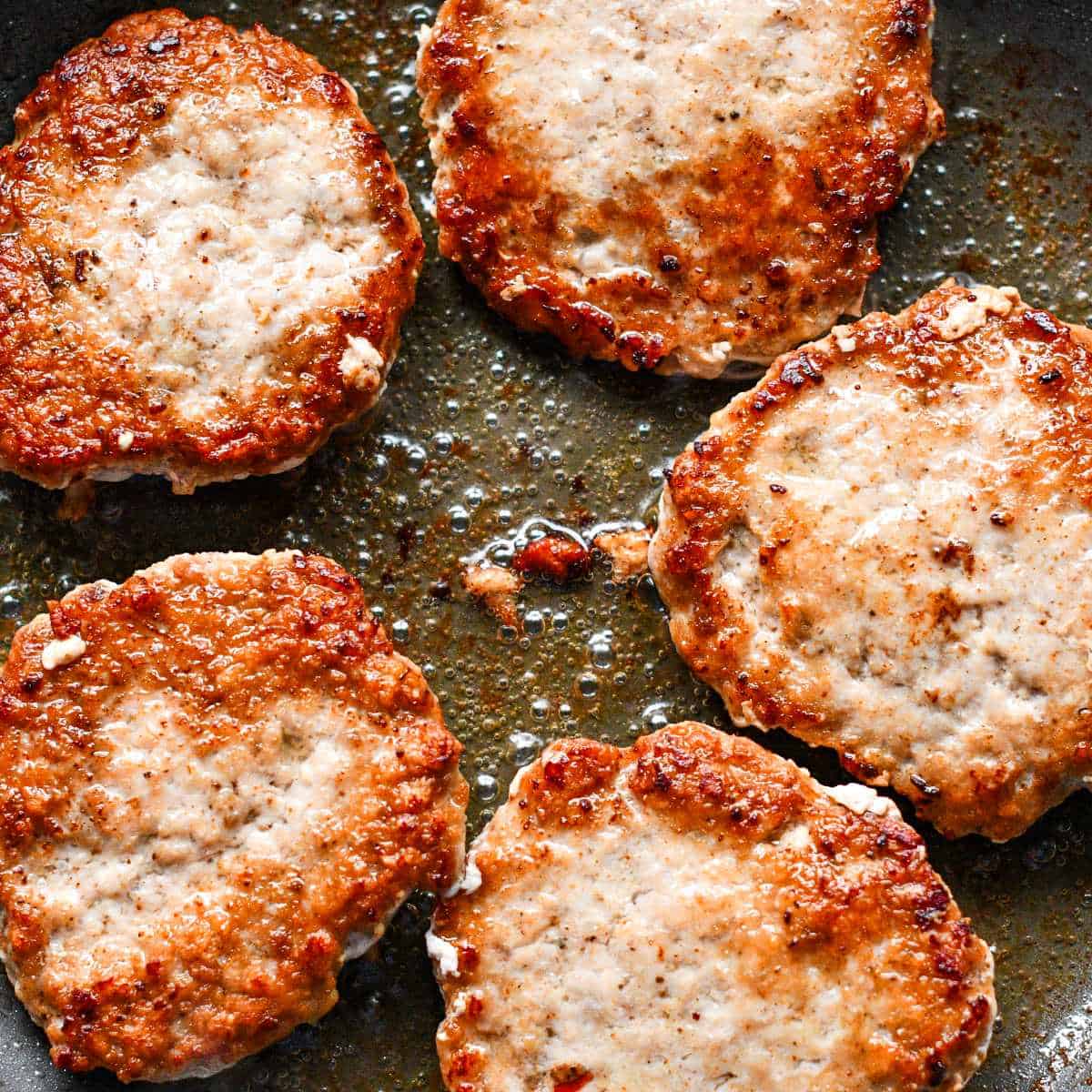
Venison Potato Sausage
Homemade Venison Potato Sausage Patties combine venison, pork, and hash brown potatoes with a blend of seasonings for a flavorful breakfast or brunch.
Servings: 40 sausage patties
Equipment
Ingredients
- 2 pounds venison trim, well chilled
- 4 pounds boneless pork butt roast, cut into 2-inch cubes and chilled
- 1 28-ounce bag frozen Southern-style diced hash browns, kept frozen
- 2 tablespoons kosher salt
- 3 teaspoons black pepper
- 4 tablespoons packed brown sugar
- 2 teaspoons dried sage
- 2 teaspoons dried thyme
- 2 teaspoons onion powder
- 2 teaspoons garlic powder
- ½ teaspoon cayenne pepper
Instructions
- Prepare the meat. Trim away any silver skin and tough connective tissue from the venison, then cut the venison and pork butt into 2-inch cubes. Spread the meat in an even layer on a rimmed baking sheet and freeze for about 30 minutes, until firm and thoroughly chilled but not frozen solid. Place your grinder parts in the freezer as well. Keep everything cold to preserve a beautifully textured sausage, with the pork fat staying in distinct little pieces instead of smearing into the meat.
- Combine the seasonings. In a small bowl, whisk together the kosher salt, black pepper, brown sugar, sage, thyme, onion powder, garlic powder, and cayenne pepper. Take a moment to break apart any clumps of brown sugar. You want every bit of sweetness and spice evenly distributed, so each mouthful tastes as good as the last.
- Combine the meat and potatoes. Transfer the chilled venison and pork to a large bowl and scatter the seasoning mixture over the top. Toss thoroughly by hand until every piece is lightly coated. Add the frozen Southern-style hash browns straight from the freezer and toss once more. There's no need to thaw them. Keeping the potatoes frozen helps the mixture stay cold during grinding, which is exactly what you want.
- Grind the sausage. Fit a sturdy meat grinder with a medium grinding plate (approximately ¼ inch). Working in batches, feed the seasoned venison, pork, and frozen hash browns through the grinder together, alternating ingredients to keep everything evenly distributed. Collect the sausage in a large bowl set over ice. The potatoes should disappear into the meat rather than remain as distinct cubes, creating a wonderfully cohesive mixture. Using clean hands, gently but thoroughly mix the ground sausage for 1 to 2 minutes,
- Test the seasoning. Before committing the entire batch, pinch off a tablespoon or two of sausage and flatten it into a small patty. Cook it in a skillet until it reaches 160 degrees F, then taste. This is your opportunity to decide whether the balance of salt, sweetness, and herbs is just right. A little more black pepper or sage can make all the difference, and it's far easier to adjust the seasoning now than after you've shaped 40 patties.
- Chill the sausage. Cover the bowl and refrigerate for at least 30 minutes. This brief rest lets the seasonings mingle, the ground potatoes soften, and the sausage mixture firm up. The result is a more manageable mixture that's easier to shape and less likely to fall apart during cooking.
- Form the patties. Divide the chilled sausage into approximately 3-ounce portions and shape each into a round patty about ½ inch thick and 3 inches across. Handle the meat gently, pressing just firmly enough to hold it together.
- Cook the patties. Heat a 12-inch nonstick or well-seasoned cast-iron skillet over medium-low to medium heat. Add a little high-heat cooking oil if needed, then arrange 4–5 patties in the skillet, leaving enough room between them for the moisture to escape. Cook undisturbed for 2 ½ minutes, until the undersides develop a deep golden-brown crust. Turn the patties and cook for another 2 ½ minutes, adjusting the heat if they're browning too quickly. The brown sugar creates a gorgeous caramelized exterior, but patience is essential. You want a gentle, steady sizzle, not an aggressive sear that scorches the sugar before the center cooks through. Check with an instant-read thermometer, making sure the thickest part of each patty reaches 160 degrees F. Rest and serve.
- Freeze the remaining patties. If you're not cooking all the sausage right away, arrange the uncooked patties in a single layer on a parchment-lined baking sheet, making sure they don't touch. Place the baking sheet in the freezer for 1–2 hours, until the patties are firm, then transfer them to freezer-safe bags or airtight containers, separating layers with parchment paper to prevent sticking. Label with the date and freeze for up to 3 months for best quality. When you're ready for a hearty breakfast, simply thaw the number of patties you need overnight in the refrigerator, then cook as directed above until they reach an internal temperature of 160 degrees F.
